Why a Basketball Hoop Sits Above the Floor
Why a basketball hoop sits above the floor: understand how its height shapes shot arc, release timing and aim, with practical ways to read a missed shot.

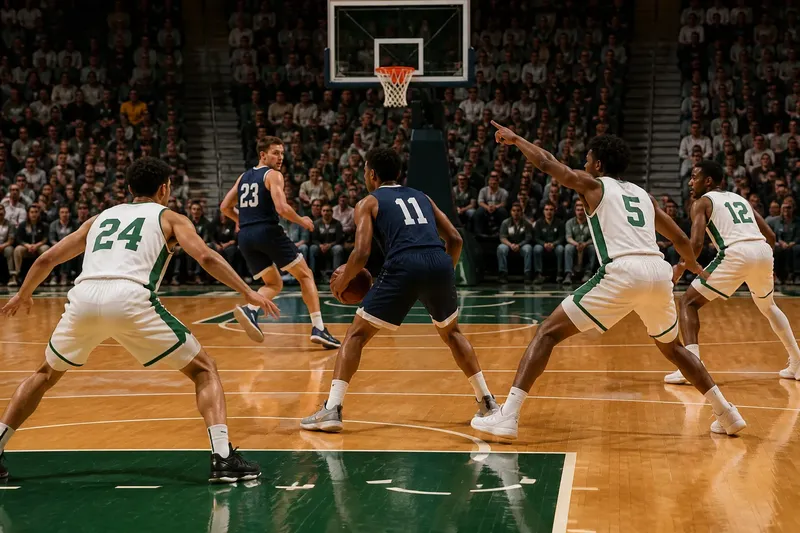
A basketball hoop sits above the floor, so a shot must travel both towards the basket and high enough to reach it. That is why understanding why a basketball hoop sits above the floor also means understanding the ball’s arc, the shooter’s distance and the timing of release.
The rim makes familiar misses visible: a ball clips its near edge, catches the back iron or drifts to one side. Each contact offers a clue, but none identifies a single cause on its own; shot type, position and the shooter’s movement all matter.
Height shapes the target
A floor-level target would make scoring mostly a matter of sending the ball across a line. Raising the rim means the ball must gain height, travel towards the basket and arrive on a path that can pass through the opening.
A shot follows a curved path. Gravity draws the ball down as it travels, while the release angle and force influence where it reaches rim level. The same point on the rim can be approached along very different paths.
The rim stays at a fixed height while the shooter’s position changes. From farther away, the ball needs more forward travel; from close in, the player has less horizontal distance but still has to lift the ball above the rim.
Aiming at the centre of the hoop is a useful visual starting point, not a complete solution. The player also has to send the ball along a suitable arc.
Reading rim contact
A front-rim miss can be consistent with a ball arriving too low, too short, or both, but the contact point does not settle the diagnosis. A changed release, a moving body or a different shot angle may also affect where the ball meets the rim.
Notice the ball’s route before changing technique. If it reaches the basket low and meets the near side, a slightly higher release may be one adjustment to consider; if it clears the front and strikes the back, the forward force or arc may need attention. These are possibilities to check, not rules that every miss obeys.
Say you are practising from a marked spot near the free-throw line, and several shots touch the front rim. Imagine keeping your feet and starting position steady, then making the next few releases slightly higher without adding a harder push. Watch whether the ball reaches the rim on a more downward path; if it instead falls short, that adjustment may not suit the shot.
Changing one element at a time makes the result easier to read. A make can still come from a fortunate rim bounce, so notice the approach and contact as well as whether the ball falls through.
Distance and arc
A ball that travels beyond the basket may have too much forward force for its arc, but a sideways release can make a miss look long. First distinguish a ball that passes over the rim from one that misses to the left or right.
If it travels straight but long, the shooter can consider reducing the forward push while retaining enough lift to clear the rim. If it misses sideways, the shooting hand, forearm and body alignment are worth checking. These observations narrow the possibilities; they do not diagnose every shot.
A low, hard throw can meet the iron and rebound sharply. A higher path changes the descent angle, though excessive height or insufficient forward travel can leave the ball short. The aim is a controlled route through the opening, not maximum height.
Close-range adjustments
Near the basket, a full throwing motion used from farther away may send the ball too hard or leave the shooter reaching awkwardly. The rim has not moved; the available horizontal distance has.
A close shot often calls for a gentler touch and a steeper route. The backboard can offer a visual reference: from some positions a player may use an appropriate area of the square, though the useful point depends on the angle and distance.
Movement adds another complication. Releasing early can leave the ball short, while waiting may let a defender close the space or disrupt balance. Coordinating the final step, jump and release helps keep the body controlled, though the timing will vary with the shot.
If the shooter is drifting sideways, changing the aiming point alone may not address the miss. A balanced take-off and a controlled release make it easier to judge direction and height.
How do arc and timing affect a shot?
Why does a basketball shot need an arc?
The ball must rise above the rim before descending through its opening. A flatter path may leave little clearance over the near edge, while a higher path changes the angle of approach.
Does a higher arc always help?
No. A steeper descent may provide a more favourable approach, but the ball still needs enough forward travel to reach the basket. The useful arc depends on the shot and the shooter’s position.
Why does a moving shot feel different?
Running or jumping affects balance and the timing of the release. The player has to coordinate the shot with that motion rather than aiming as if standing still.
What does a rim miss tell you?
It shows where the ball met the boundary, not exactly why it arrived there. Look at the full path, body movement and shot position before deciding what to adjust.
Reading the whole flight
The raised rim makes scoring a joint problem of height and direction. A player adjusts arc and force to the distance, then releases the ball while able to control its path.
When a shot misses, read the flight before changing technique. Front-rim contact, an overshoot and a sideways miss suggest different possibilities, but they are clues rather than verdicts. Keeping the starting position steady while adjusting one part of the release can make those clues easier to interpret.
That is why a basketball hoop sits above the floor: its height gives every shot a vertical problem as well as a horizontal one. For anyone trying to understand why a basketball hoop sits above the floor, the useful detail is the ball’s approach: the rim turns aiming into shaping and timing a curve, not merely sending a ball towards an opening.