Your First Afternoon Watching a Test Match
Your first afternoon watching a Test match is easier to follow when you track one batter, read a field change and use the scoreboard for context.
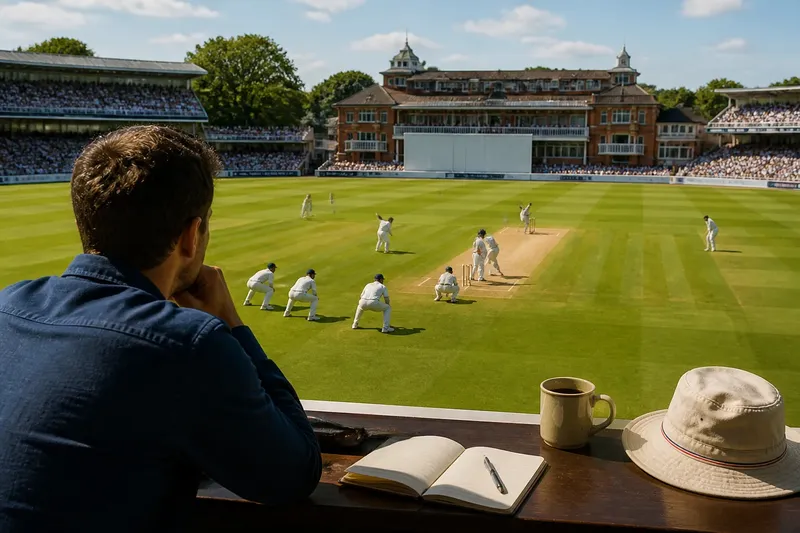
Your first afternoon watching a Test match is easier if you follow one passage of play instead of trying to account for every ball, field change and statistic. Settle on a manageable stretch, watch how the captain arranges the field, and let the match take the time it takes.
Test cricket runs over several days, so a quiet spell is not a failure of entertainment. It may be a contest over patience, risk and small adjustments; nobody is going to collect your notes at the door.
Choose a passage
Begin with the score, the wickets lost and the batters at the crease. The score tells you how many runs have been made, while wickets lost show how many dismissals the batting side has used. Together, they give a rough sense of whether a side is building an innings or trying to steady it.
Then follow one batter’s problem. Notice where they tend to play, which deliveries they leave alone and whether they seem to be looking for a scoring shot. You need not identify every delivery; ask whether the bowler is making the batter defend, reach or choose between awkward options.
Watch several balls in sequence rather than checking the score after each one. A delivery that seems uneventful may set up the next by drawing the batter forward or making them expect a particular line. The point is not to predict what comes next, but to notice how bowler and batter respond to each other.
Read field changes
When a fielder moves, note where they were and where they go. A fielder brought closer may be there to catch a mistimed shot; one moved towards the boundary may be there to stop a ball reaching the rope. The placement hints at the kind of shot or mistake the fielding side expects.
A close-catching position can make a batter feel watched and reduce easy scoring options. A boundary fielder protects against a well-struck shot but leaves more space elsewhere. Captains balance those aims rather than finding one flawless arrangement, so watch what the field gives up as well as what it tries to prevent.
Look at the bowler’s line and the batter’s preferred response. If several fielders cluster on one side, the plan may be to encourage a shot there and keep catchers nearby. Treat that as a reading of the situation, not a certainty: the same placement can serve different purposes.
Use the scoreboard lightly
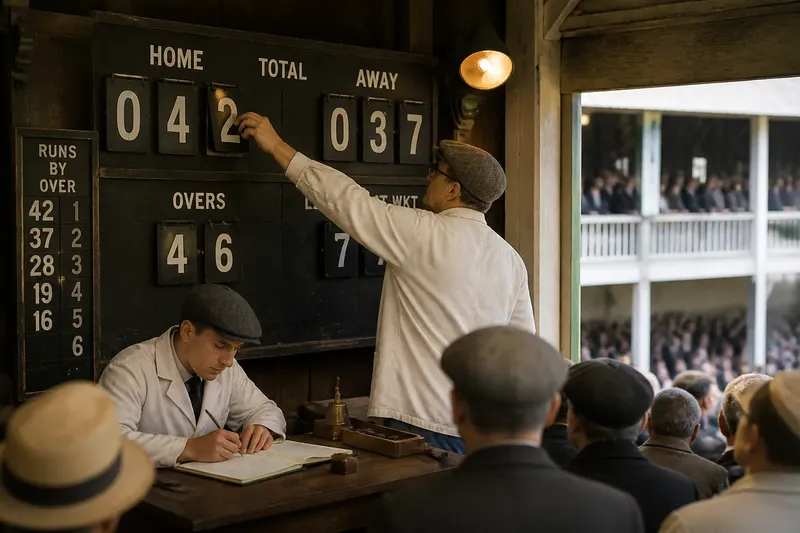
A score is a snapshot, not a full account of the innings. The wickets lost and the batters at the crease give it context: a side with wickets available may be able to take more risks than one close to its last pair. The match situation matters too, so a run can have a different value at different points in the game.
An over is a sequence of six valid balls bowled by one bowler, after which play switches to the other end and another bowler takes over. A delivery that is called a no-ball or a wide does not count among those six valid balls, so an over can contain more than six deliveries. Use the end of an over as a natural moment to look back: did the batter score freely, did the bowler keep the ball in a difficult area, or did the field move?
A batter’s score or a bowler’s figures can help explain the broadcast, but neither tells the whole story. A batter may have spent a long time resisting a difficult spell; a bowler may have created pressure without taking a wicket. Use the numbers to support what you see, not to replace it.
Keep the pace manageable
Test cricket includes scheduled pauses, and play can also slow while players reset or conditions are attended to. Use a break to get a drink or step away, then return when play resumes. Watching continuously is not a qualification for understanding the game.
Keep one narrow question in mind, such as whether the bowler can make the batter play at a delivery or whether the captain is protecting a scoring area. A single question gives your attention a thread without turning the afternoon into homework. Change it when the match situation changes.
Commentary can explain a field adjustment, a bowler’s plan or an innings detail. Listen when it helps, then look back at the players and judge whether the explanation fits. Not every defended or left delivery needs a dramatic interpretation; pressure often builds in small, visible ways.
Questions during play?
What should I watch first?
Start with the batter, bowler and nearest fielders. Follow where the ball is directed and whether the batter plays, leaves or defends it; that is enough to make the next delivery more legible.
Why do fielders keep moving?
The captain is adjusting the balance between catching chances, stopping runs and responding to the batter or bowler. Watch which area gains a fielder and which area becomes more open.
Do I need to know every rule?
No. A basic grasp of runs, wickets, overs and innings is useful, but you can check a reliable explanation when a dismissal or decision is unclear. Laws and playing conditions can affect unusual situations, so use the match’s official explanation for those details.
What if I miss a wicket?
Look at the new batter, the score and any change in the field. The broadcast may replay the dismissal, but the game moves on; you can follow the next passage without reconstructing every delivery you missed.
A fielding change
Say you arrive while a batter is defending several balls from a bowler working towards the off side. A close fielder stands in catching range, while another guards the boundary; after the batter drives into a gap, the captain shifts a fielder to cover it. You note the gap has been covered and decide to watch whether the batter now chooses a different shot or keeps trying the same one. That gives you a concrete thread through the next passage without requiring a prediction.
For your first afternoon watching a Test match, focused attention is enough. Choose a passage, follow one batter or fielding change, and let the score provide context rather than instructions. When players alter their plan, you have something concrete to notice; when they do not, the over still gives you a useful point to pause and take stock.